The UFO Library: Military encounter
HMAS Hobart and the 1968 DMZ 'Battle of the Lights'
On the night of 15–16 June 1968, Allied forces off the Vietnamese DMZ reported a swarm of slow lights, fired on them, and in the confusion friendly aircraft sank a US Navy patrol boat and struck Australia's HMAS Hobart, killing sailors. The official explanation is friendly fire; the UFO framing came from a senior US Air Force general's remarks.
Background
In mid-1968 the Vietnam War's eastern Demilitarized Zone was a dense zone of North Vietnamese infiltration routes, coastal patrols and air defence. Allied forward spotters ashore reported a group of lights moving slowly over the water on the evening of 15 June. They were first assumed to be North Vietnamese helicopters, a reasonable guess given the period, and the response was built around that assumption.
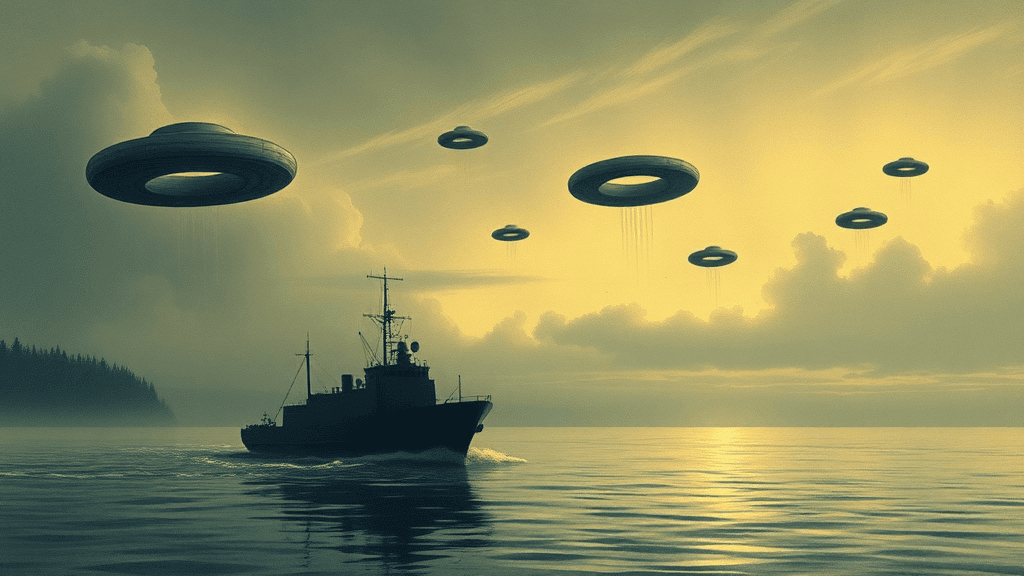
Allied Command moved anti-aircraft guns to the border, put fighter-bombers on standby at Da Nang and sent warships to patrol the coast. Among them was HMAS Hobart, an Australian guided-missile destroyer working the gunline off the DMZ. Her role was to intercept suspected helicopter activity around Tiger Island.
The night of 15–17 June
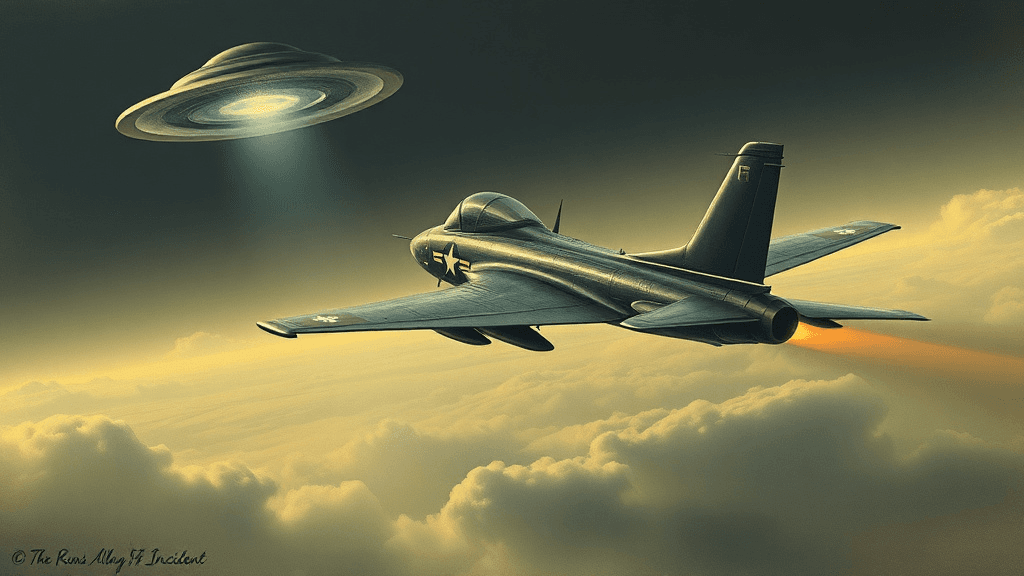
The sequence is reconstructed in the Wikipedia article on the ship and in popular UFO accounts such as Think About It Docs. Later that night, US Air Force Phantom jets engaged the targets, and shortly after midnight the US Navy patrol boat PCF-19 was sunk. A US Navy inquiry later found that PCF-12, PCF-19 and the Coast Guard cutter Point Dume had been attacked by aircraft believed to be friendly. Only PCF-19 was lost.
Around 03:09 on 17 June, Hobart's radar detected an approaching aircraft with no active identification transponder. Missiles hit the ship in the first attack and again in a second run about two minutes later. Two sailors were killed and eight were wounded, according to the Wikipedia account. Debris showed the missiles were of USAF origin. Hobart was repaired at Subic Bay and returned to the gunline in July.
The ship was not the only casualty of confusion. The Phantom crews also fired on Hobart, Boston and Edson after the earlier attack, because they were "unable to distinguish" surface ships from helicopters in the air.
Explanations and the UFO framing
The official explanation is misidentification. Investigators concluded that the Phantoms' radar could return an echo from a slow-moving warship that looked like a low-flying helicopter, and that the missiles hit a ship read as "friendly" by its own identification system. Under that reading, there were no alien craft, only a sequence of errors by the forces involved.
The UFO interpretation rests mainly on a 1973 press statement by Gen. George S. Brown, then Air Force Chief of Staff, who described "a series of [UFO] sightings which set off quite a battle" near the DMZ "early in the summer of 1968." The Naval Historical Society of Australia recorded that statement while noting that Hobart was hit by US aircraft missiles, which points to friendly fire. A separate, uncorroborated account from PCF-12 crewman Jim Steffes describes two objects hovering about 300 yards away, one of which he said opened fire before his crew returned fire. Ufology has used these accounts to argue that the lights were unknown craft, but no wreckage of any enemy aircraft was recovered and no primary-source evidence for a non-human origin has been published.
Legacy and credibility
The incident is best understood as a documented friendly-fire disaster that acquired a UFO layer in later retelling. The casualties and the Hobart strike are well established. The lights, the swift-boat sinking's exact cause and the UFO connection are less so, because the surviving accounts rely heavily on secondary and popular sources, and the Board of Inquiry text is not widely available.
For the UFO literature, the case matters because a senior military officer publicly linked it to UFO sightings, a rare step for that era. For the military, it is a cautionary example of how radar limitations and identification failures in a crowded combat zone can turn ordinary aircraft into a "mystery". Credibility is rated contested: the core events are real, but the UFO explanation is not supported by the evidence that is currently available.
Witnesses
Allied forward spotters ashore first reported the lights. Crewmen aboard PCF-12 and PCF-19 and the crew of HMAS Hobart were involved. Jim Steffes, a PCF-12 crewman, later published an account of two hovering objects, which is not corroborated by other records.
Evidence
No wreckage of any enemy aircraft was recovered. Ship damage on Hobart and debris from the missiles were examined by RAN and USN personnel, including three admirals. The USN inquiry and Australian Board of Inquiry blamed friendly aircraft and Phantom radar limitations. No photographs or recordings of the lights are known to have been published.
Filed under
Where this entry came from
ProvenanceAgent indexedUpdated 2w ago4 sources
Drafted by the archive's AI research agent from the sources below; corrections from readers are reviewed and folded in.
- First indexed
- 26 OCT 26 // 00:21Z
- Last updated
- 26 OCT 26 // 00:21Z
- HMAS Hobart (D 39), Wikipedia contributors, Wikipedia
- 18 October 1973 (On This Day), Naval Historical Society of Australia, Naval Historical Society of Australia
- 1968: Navy ship HMAS Hobart hit during Vietnam UFO encounter?, Think About It Docs
- Navy ship HMAS Hobart hit during Vietnam UFO encounter? - DMZ, Viet Nam - June 15, 1968, UFO Evidence
Notes
- HMAS Hobart (D 39), Wikipedia contributors, Wikipedia
- 18 October 1973 (On This Day), Naval Historical Society of Australia, Naval Historical Society of Australia
- 1968: Navy ship HMAS Hobart hit during Vietnam UFO encounter?, Think About It Docs
- Navy ship HMAS Hobart hit during Vietnam UFO encounter? - DMZ, Viet Nam - June 15, 1968, UFO Evidence
Also available
Hangar 1: The UFO Files
History/H2 docuseries (multi-episode, one entry for the series) whose season 2, episode 1 dramatizes the June 1968 Vietnam DMZ 'battle of the lights' and the friendly-fire hit on HMAS Hobart. The re-enactments are dramatized and not independently confirmed, so treat the UFO framing as the show's, not the record's.