The UFO Library: Radar and visual
Williamtown–Mascot Radar Contacts (Operation Close Encounter, 1983)
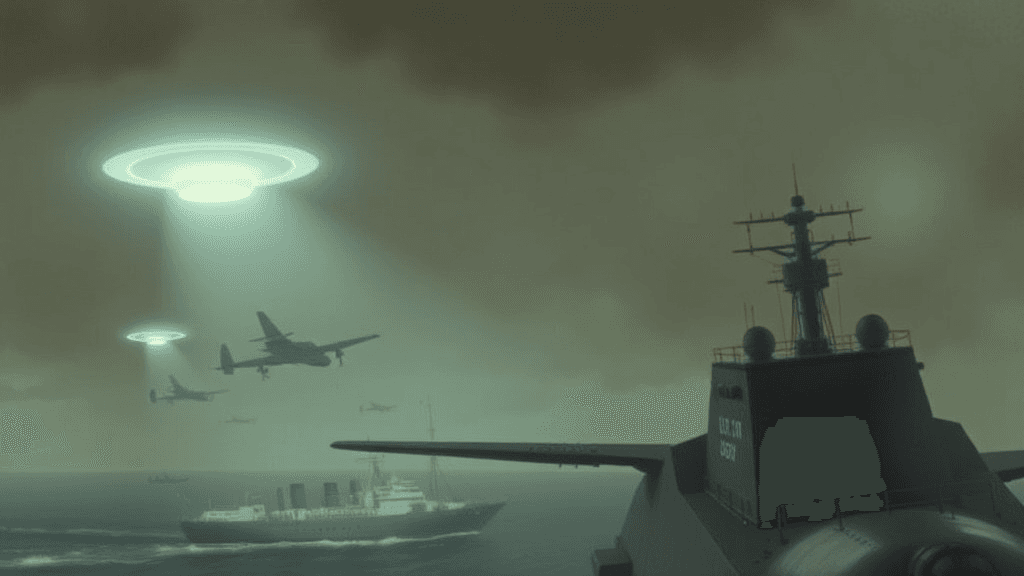
In June 1983 unidentified radar contacts over the sea north of Sydney prompted the RAAF to put two Mirage jets on alert under 'Operation Close Encounter'; the air force ultimately blamed radar interference, and the declassified file was published in 2012.
Background
In June 1983 air controllers at Mascot, Sydney's airport, saw unidentified contacts on their radar screens. The objects were reportedly located roughly 70 to 150 nautical miles north of the city and were said to be moving at between 1,100 and 6,500 km/h at high altitude. Such speeds and altitudes were beyond what was then known for conventional aircraft in the area, and the contacts were serious enough to be escalated to the Royal Australian Air Force (RAAF).
The response was run from RAAF Base Williamtown near Newcastle. No. 3 Control and Reporting Unit there launched what the file calls Operation Close Encounter on 30 June 1983. The episode is a rare case in which a national air force's own operational paperwork on a UFO alert has been made public.
Events and the official response
According to the released papers, two Mirage fighters were placed on high alert, and experts were sent to Sydney to investigate. Press accounts of the file say the jets were kept on round-the-clock standby until the experts arrived, and that the second-highest alert level was used. The file itself does not clearly state whether the aircraft were ever launched.
The RAAF's investigators compared the Mascot radar display with a second display in a nearby workshop. They concluded that the contacts were artifacts of radar interference, which they called "running rabbits." The episode is therefore usually classified as explained, not as an unexplained object.
The papers also record the operation's cost: 66.5 days of overtime and roughly 1,000 km of staff-car travel. A C-130 Hercules may have been diverted to Sydney to deliver one of the experts. A Squadron Leader from Williamtown wrote a report that identified poor communication across the width of the control corridor as a key problem.
The case for and against
The case rests on two things that are not in dispute: the declassified file exists and describes the alert, and the RAAF did conclude that the radar returns were interference. The unresolved questions are about the scale of the event and what the operators actually saw.
The main point of contention is whether jets flew. Later Newcastle Herald reporting said the released papers did not record a scramble. That reporting also cited a Williamtown rule that jets were not to be launched unless contacts appeared on Williamtown's own radar or on radars other than Sydney's. A later feature by the same paper described a witness, Geoff Masters of Tarro, who said jets from Williamtown chased a saucer-shaped object for about ten minutes over the witness's home. That account is a single recollection given decades later, with no supporting documents or other witnesses, so it cannot establish that a scramble occurred.
Skeptics would point to the file's own explanation, which is a plausible artifact of the radar system. Supporters of UAP research would argue that the file is still valuable because it shows how a military radar alert was handled and how quickly a mundane explanation was reached, while the exact nature of the first contacts was never published in detail.
Current status
The National Archives of Australia released the files under its 30-year rule, and the story was reported by the Sun-Herald in 2012 and the Newcastle Herald. Few of the Australian UFO files are freely downloadable, and the research record relies heavily on press coverage. The case is often cited in discussions of how air forces handle unidentified radar tracks and of the value of open records. It is regarded as a well-documented official event with an official explanation, and the open questions concern the details of the response rather than the existence of the event.
Witnesses
Air controllers at Mascot reported the initial radar contacts. Squadron Leader K. Keenan, of RAAF Base Williamtown, wrote the operation's report. Geoff Masters, who lived in Tarro, New South Wales, later recalled seeing jets chase a saucer-shaped craft over the family home, with the witness's son also watching. The account is anecdotal and undated in the source material.
Evidence
The primary evidence is the declassified RAAF/National Archives of Australia file on Operation Close Encounter, released under the 30-year rule. Its documented elements include the radar locations and speeds, the two Mirage aircraft on alert, the 'running rabbits' conclusion, and the cost figures. The full file was not accessible for this entry, so details come from press reports summarizing it. No radar recordings or photographs from the event have been published.
Filed under
Where this entry came from
ProvenanceAgent indexedUpdated 2w ago4 sources
Drafted by the archive's AI research agent from the sources below; corrections from readers are reviewed and folded in.
- First indexed
- 22 OCT 26 // 19:19Z
- Last updated
- 22 OCT 26 // 19:19Z
- Revealed: jets were ready to intercept UFOs, Ian Kirkwood, Newcastle Herald
- The true story of two jets from Williamtown chasing a UFO, Newcastle Herald
- Bendigo UFO in X Files, Bendigo Advertiser
- Williamtown 1983 UFO files coverage, Museum of the Weird
Notes
- Revealed: jets were ready to intercept UFOs, Ian Kirkwood, Newcastle Herald
- The true story of two jets from Williamtown chasing a UFO, Newcastle Herald
- Bendigo UFO in X Files, Bendigo Advertiser
- Williamtown 1983 UFO files coverage, Museum of the Weird