The UFO Library: Mass sighting
The Warminster Thing
Multi-year UK UFO flap (1964–1977) centered on Warminster, Wiltshire, featuring cigar-shaped craft, strange sounds, and mass public engagement.
The Phenomenon Emerges
The Warminster Thing began on Christmas morning 1964, when resident Mildred Head was awakened at 1:25 a.m. by strange noises on her roof—initially sounding like twigs scratching tile, then escalating to sounds like giant hailstones. She reported a strange humming that grew louder before fading to a faint whisper and low whistling. This isolated incident might have been forgotten, but similar reports began accumulating through the spring and summer of 1965, transforming the quiet market town into Britain's UFO capital.
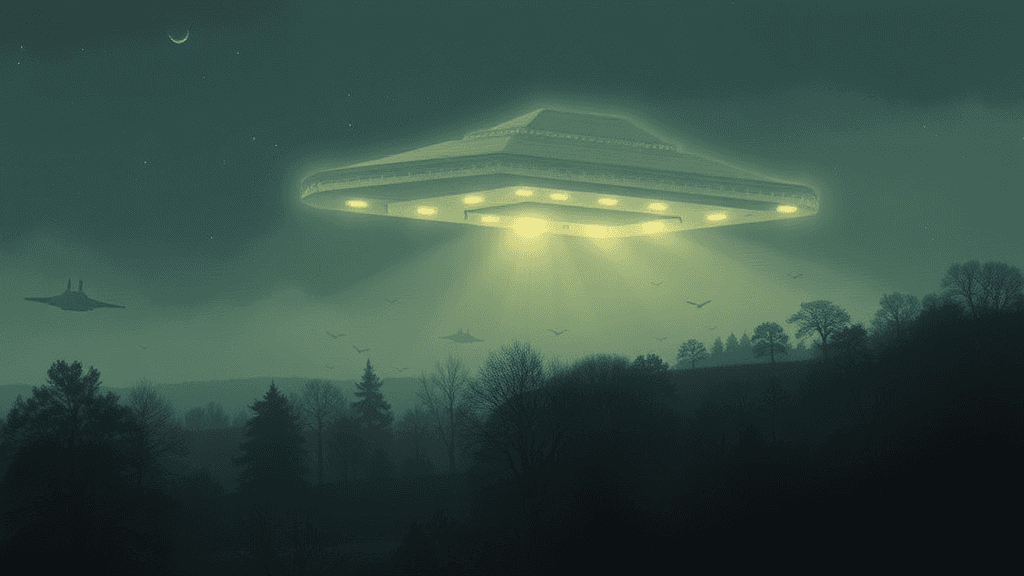
The sightings quickly evolved beyond simple lights and sounds. In June 1965, a vicar, his wife, and three children witnessed a stationary cigar-shaped metallic object hanging in the sky above nearby Heytesbury for approximately half an hour. The respectability of the witnesses—a member of the clergy and his family—lent significant credibility to the phenomenon and attracted serious attention from the public and media alike.
Peak Activity and Mass Engagement
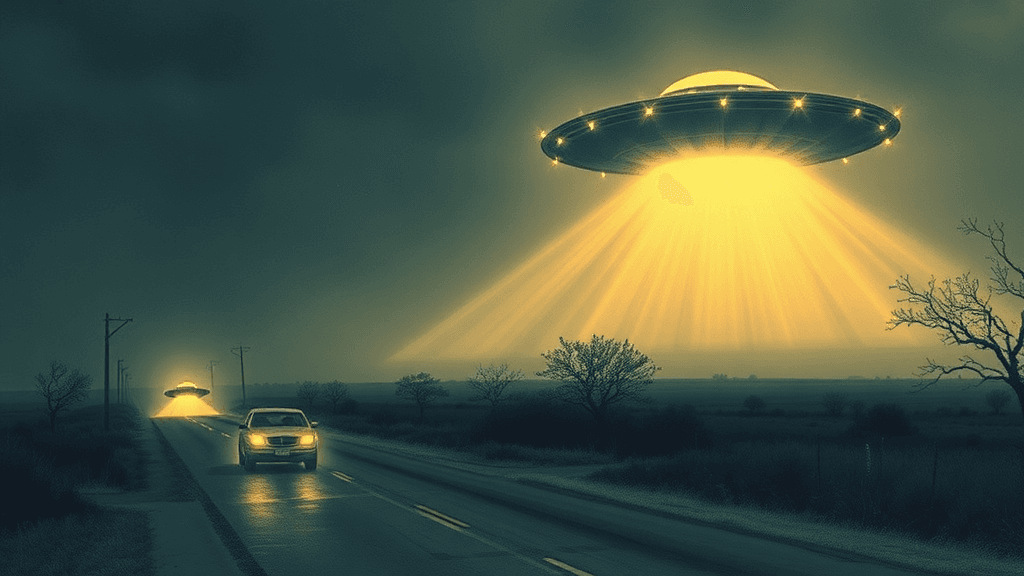
By August 1965, the phenomenon had become a major media event. An estimated 8,000 people descended on Warminster during the August Bank holiday weekend, drawn by accounts of UFO sightings and the town's sudden mystique. This surge of visitors transformed Warminster into an impromptu pilgrimage site, with hundreds of civilians organizing informal sky-watching vigils in hopes of witnessing the unexplained objects themselves.
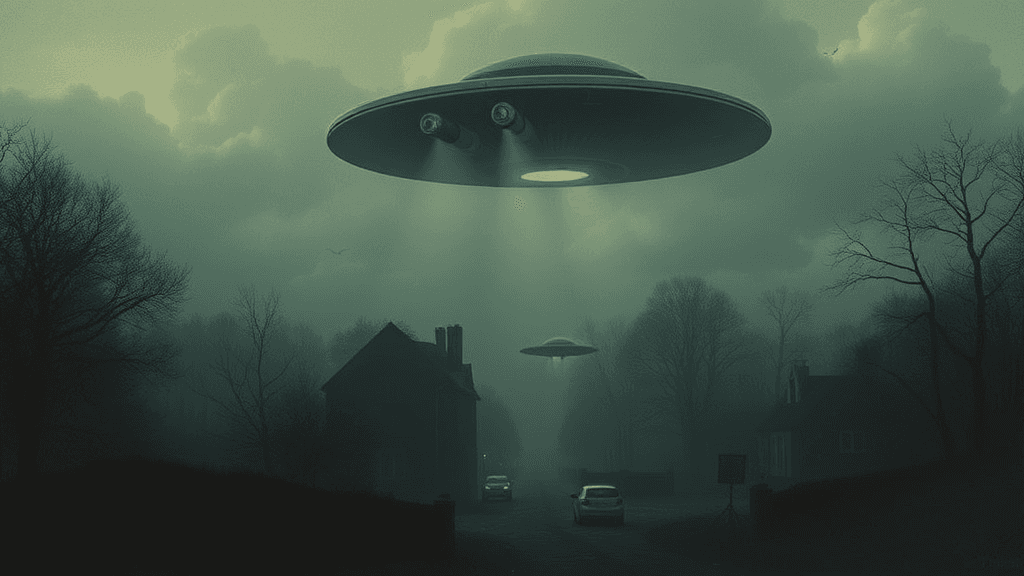
Photographer Gordon Faulkner captured what appeared to be a classic flying saucer in September 1965, and the Daily Mirror's publication of his grainy but striking image brought national—and then international—media attention. The photograph became iconic, reproduced across newspapers and publications, cementing the Warminster Thing's place in British popular culture.
Police Constables Roger Willie and Clifford Waycott, trained observers with inherent institutional credibility, provided detailed witness statements describing a star-like object performing erratic maneuvers in the night sky. Their carefully sketched drawings of the UFO and professional demeanor bolstered public confidence that something genuinely anomalous was occurring.
Documentation and Investigation
Journalist Arthur Shuttlewood, initially skeptical, became convinced after witnessing his own encounter on September 28, 1965, when he observed a cigar-shaped spacecraft he described as a "banana boat in the sky." Shuttlewood became the primary chronicler of the phenomenon, organizing sky-watching expeditions from Cradle Hill and Cley Hill near Salisbury Plain—locations that became focal points for ongoing observation. His 1967 book The Warminster Mystery remains the definitive contemporary account, combining eyewitness narratives with atmospheric descriptions and investigative documentation.
The BBC West and South region contributed to the phenomenon's legitimacy by producing Pie in the Sky, a 30-minute documentary broadcast on April 1, 1966, that treated the Warminster events as a serious matter worthy of investigation. However, the documentary's conclusion—that sightings were likely secret military technology being tested on nearby Salisbury Plain—reflected contemporary skepticism even as it acknowledged the reality of the reports.
The strange sounds remained a persistent and disturbing element of the phenomenon. Witnesses described low droning sounds that caused floors and beds to vibrate, hailstone-like auditory phenomena, and unexplained humming that left some observers feeling weak and temporarily immobilized. These sonic reports transcended typical UFO sightings, suggesting a phenomenon with physical effects on the environment and human physiology.
Legacy and Decline
By the early 1970s, visitor numbers declined and reported sightings became less frequent, though sporadic reports continued until 1977. The Warminster Thing never produced physical evidence—no debris, no landing marks, no electromagnetic effects documented by scientific instruments—leaving it perpetually in the contested middle ground between genuine anomaly and mass hysteria.
The phenomenon remains historically significant as one of the most extensively witnessed and documented UK UFO flaps, particularly notable for its engagement of credible institutional witnesses (clergy, police) and the coordinated civilian sky-watching efforts it inspired. Whether caused by classified military activity, atmospheric phenomena, or genuine extraterrestrial visitation, the Warminster Thing represents a key moment when British UFO interest achieved mainstream cultural prominence.
Witnesses
- Mildred Head (initial witness, Christmas 1964 noises)
- Vicar, his wife, and three children (June 1965 cigar-shaped craft sighting, Heytesbury)
- Police Constables Roger Willie and Clifford Waycott (detailed sighting documentation)
- Arthur Shuttlewood (journalist; September 1965 personal sighting)
- Gordon Faulkner (photographer; September 1965 photograph)
- Estimated 8,000 visitors during August 1965 peak activity
Evidence
- Gordon Faulkner photograph published in Daily Mirror, September 1965
- Sketches and written testimonies from Police Constables Willie and Waycott
- Arthur Shuttlewood's book The Warminster Mystery (1967) with compiled witness accounts
- BBC documentary Pie in the Sky (1966)
- Multiple newspaper and magazine articles from 1965–1967
Filed under
Watch
The Warminster Thing
The Warminster Thing: A UFO Mystery That Continues To This Day | Documentary
The Warminster Thing – Britain’s Strangest UFO Mystery [Eerie's Vault Episode #9]
Warminster: A UFO Mystery That Never Ended
1973: UFO SPOTTING in WARMINSTER, WILTSHIRE | Nationwide | Weird and Wonderful | BBC Archive
Where this entry came from
ProvenanceAgent indexedUpdated 5mo ago4 sources
Drafted by the archive's AI research agent from the sources below; corrections from readers are reviewed and folded in.
- First indexed
- 12 JUN 26 // 14:18Z
- Last updated
- 12 JUN 26 // 14:18Z
- The Warminster UFO Mystery - 'The Warminster Thing', Unknown, Strange Outdoors
- Revisiting The Warminster UFO 'Thing', Unknown, Higgypop Paranormal
- The Warminster Thing and Decades of Unexplained Phenomena in England, J.A. Hernandez, Into Horror History
- UFO expert gives verdict on Warminster Thing 60 years on, Unknown, Warminster Journal
Notes
- The Warminster UFO Mystery - 'The Warminster Thing', Unknown, Strange Outdoors
- Revisiting The Warminster UFO 'Thing', Unknown, Higgypop Paranormal
- The Warminster Thing and Decades of Unexplained Phenomena in England, J.A. Hernandez, Into Horror History
- UFO expert gives verdict on Warminster Thing 60 years on, Unknown, Warminster Journal
Also available
The Warminster Thing
BBC documentary investigating the Warminster UFO phenomenon that gripped the English town of Warminster, Wiltshire from 1964 onwards. Features interviews with witnesses, journalist Arthur Shuttlewood, and local officials documenting the strange sounds and aerial phenomena that drew national attention.
The Warminster Thing: A UFO Mystery That Continues To This Day
Modern documentary recounting the Warminster UFO mystery that began on Christmas morning 1964 with unexplained sonic sounds. Examines the historical sightings, witness testimonies, and ongoing mystery surrounding the incidents that made Warminster Britain's UFO capital.