The UFO Library: Contact
Livingston/Dechmont Law Incident
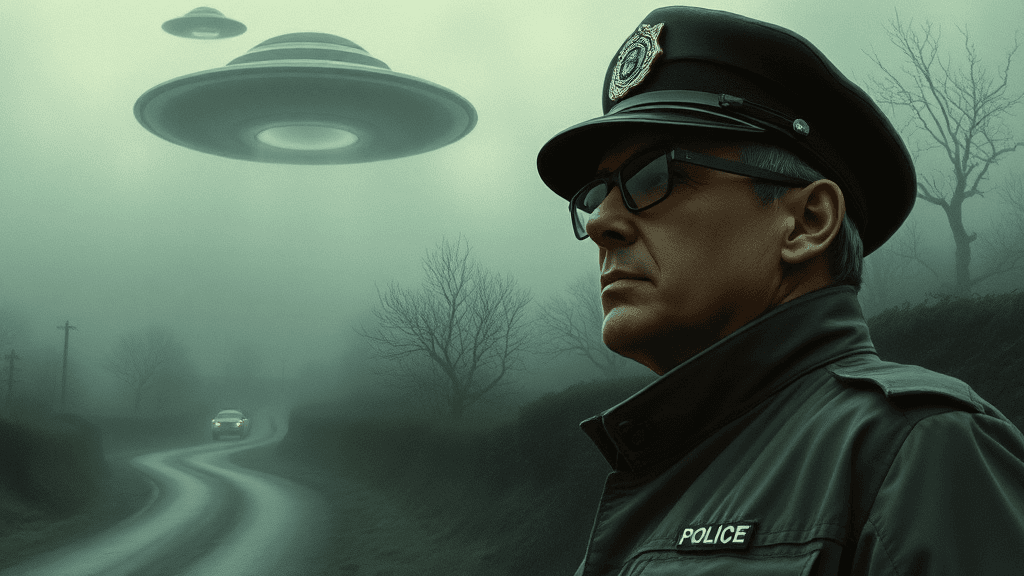
Forester Robert Taylor's close encounter with an unidentified craft and smaller spheres on Dechmont Law—the only UK UFO sighting to result in a criminal investigation.
The Encounter
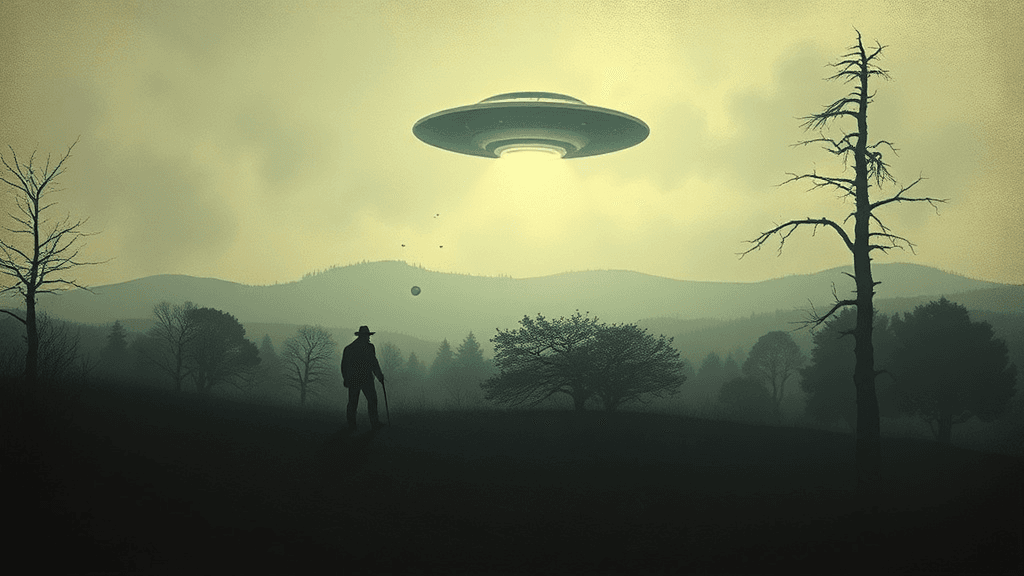
On the morning of November 9, 1979, Robert 'Bob' Taylor, a 60-year-old forester with an impeccable reputation, parked his pickup truck near the M8 motorway in Livingston, West Lothian, Scotland, and set out for his usual work routine with his dog, a red setter named Lara. Walking along a forest path toward Dechmont Law, Taylor spotted what he would later describe as a "flying dome" hovering silently in a clearing ahead. The craft was approximately 20 to 30 feet in diameter, dark grey in color, with an outer flange and arms mounted with what appeared to be small propellers.
As Taylor approached to get a better look, two smaller spheres—each resembling a sea mine, about the size of car tires—emerged from the larger object. The smaller spheres moved toward him with a screeching noise, accompanied by what Taylor described as a foul odor "like burning brakes." Before Taylor could react, the smaller spheres seized him, attaching to his legs and dragging him forcefully toward the main craft. He struggled against the pull but was unable to resist. At this point, Taylor's consciousness faded, and he lost awareness of what followed.
When he regained consciousness, the dog was barking frantically, the objects had vanished, and he found himself unable to start his truck. Still dazed and disheveled, Taylor made his way home on foot.
Physical Evidence and Investigation
Taylor's wife immediately noticed his condition: torn trousers, grazes on his chin and thighs, and muddy clothing. A doctor was called and treated his injuries. The torn clothing became central to the investigation—forensic examination concluded that the rips had been made from the inside out, consistent with mechanical pulling rather than forest debris, suggesting direct physical contact with an external force.
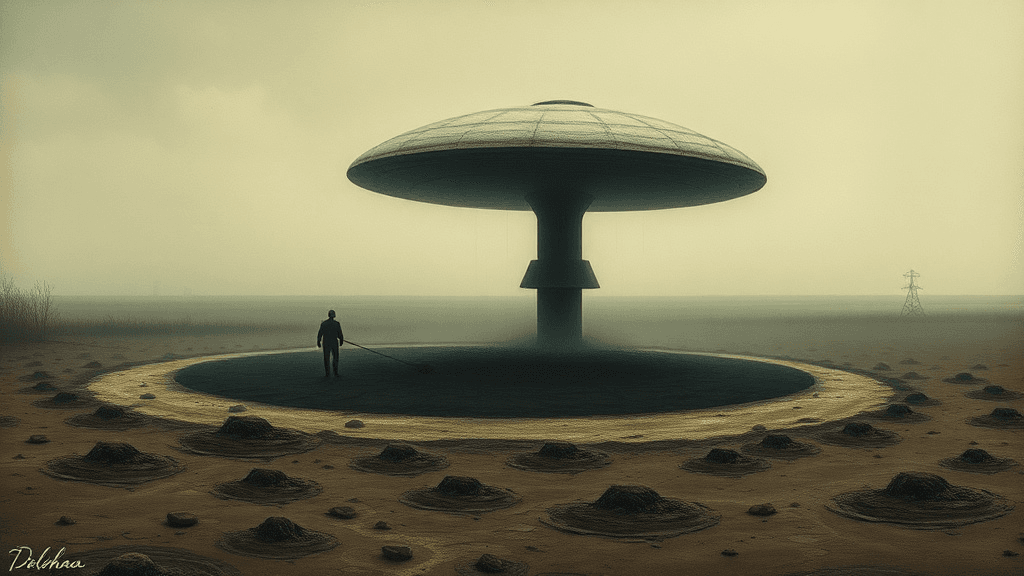
Police accompanied Taylor to the site the next day and discovered a series of curious ground marks. They documented ladder-shaped impressions in the earth, consisting of two parallel sets of tracks approximately 2.5 meters long and spaced 2.5 meters apart. Additionally, they found 32 to 40 small circular holes, each about 3.5 inches in diameter, scattered in the vicinity of where Taylor indicated the main craft had hovered.
Notably, police recorded the incident as "common assault"—a criminal offense—making this the only UFO sighting in the UK that resulted in a formal criminal investigation. Inspector Lark stated that they "had no reason to doubt anything about what he was telling us," and everyone who knew Taylor confirmed he "just would not make up a story like that." His character and credibility were never questioned.
Credibility and Consistency
What distinguishes the Livingston case is Taylor's unwavering consistency. Until his death in 2007, Taylor maintained the same account of the event through numerous interviews. He never embellished his story, never sought publicity, and never profited from the incident. UFO researcher Philip Mantle has highlighted this consistency as powerful evidence against hoax claims.
Taylor was a working man with no apparent motive to fabricate such an encounter. The physical evidence—forensically analyzed torn clothing, documented ground impressions, and his genuine injuries—provided objective corroboration of his account. His character, his profession, and the police department's treatment of the case all lend weight to his testimony.
Contested Explanations
Sceptics have proposed various alternative explanations: disorientation or confusion on Taylor's part, natural phenomena poorly understood at the time, or classified military testing of advanced aircraft. However, none of these explanations adequately account for all elements of the case—the drone-like craft description predates modern UAV development by decades, the ground marks remain unexplained by conventional means, and military aircraft of the era do not match the account.
The incident remains genuinely contested in mainstream science, with no definitive explanation ever offered. Despite extensive investigation and scrutiny, the case has resisted conventional resolution, making it one of Britain's most compelling and well-evidenced UFO encounters.
Witnesses
Robert 'Bob' Taylor (1919–2007), forester; dog (red setter Lara)
Evidence
- Forensically examined torn trousers with rips consistent with mechanical upward pulling
- Documented injuries: grazes to chin and thighs, treated by physician
- Ladder-shaped ground impressions (two parallel tracks, ~2.5m long, ~2.5m spacing)
- 32-40 circular holes (~3.5 inches diameter) in soil around landing site
- Police official investigation and documentation
- Witness consistency over 28-year period until death
Filed under
Watch
Robert Taylor talks he was attacked by a UFO in Dechmont Woods, Livingston, Scotland, 1979
Dechmont Woods Incident
Where this entry came from
ProvenanceAgent indexedUpdated 5mo ago4 sources
Drafted by the archive's AI research agent from the sources below; corrections from readers are reviewed and folded in.
- First indexed
- 04 JUN 26 // 16:18Z
- Last updated
- 04 JUN 26 // 16:18Z
- Robert Taylor incident, Wikipedia
- The Livingston Incident, Undiscovered Scotland
- Livingston Dechmont Woods Incident—A 'Criminal Investigation' Of A UFO!, UFO Insight
- Case File Number: 1013 Encounter: Unidentified Flying Object (UFO), West Lothian Council
Notes
- Robert Taylor incident, Wikipedia
- The Livingston Incident, Undiscovered Scotland
- Livingston Dechmont Woods Incident—A 'Criminal Investigation' Of A UFO!, UFO Insight
- Case File Number: 1013 Encounter: Unidentified Flying Object (UFO), West Lothian Council
Also available
The Dechmont Woods Case Documentary
Direct investigation into the November 9, 1979 encounter involving forester Robert Taylor in Dechmont Law, Scotland. The only UFO incident in UK history to become a criminal investigation, featuring interviews with investigators, witnesses, and case experts.
The Phenomenon
Comprehensive examination of UFO history and credible sightings, including interviews with government officials, NASA astronauts, and military witnesses. Covers major cases and the suppression of UFO evidence.
I Know What I Saw
Documentary featuring testimony from military pilots, government officials, and other credible UFO witnesses from around the world. Compiles eyewitness accounts and investigations of confirmed aerial phenomena.
Close Encounters of the Fifth Kind: Contact Has Begun
Documentary presented by Dr. Steven Greer examining CE-5 contact experiences and evidence of extraterrestrial interaction. Features interviews with prominent researchers and former government officials discussing human-initiated contact protocols.
UFO
Series. Four-part Showtime documentary miniseries examining UFO history and major incidents. Each episode investigates specific cases and government response to unidentified aerial phenomena.
Buying through these links supports the library. We may earn a commission.