The UFO Library: Sighting
Robertson Island (Antarctica) UFO Sighting, 1956
During the International Geophysical Year, a four-person Chilean party stationed on an Antarctic island reported two stationary metallic craft in January 1956; the account survives mainly in ufology publications and a 2015 Chilean UFO-body write-up, with pseudonymous witnesses and no primary record found.
Background
The International Geophysical Year (IGY, 1957–58, with preparatory work in 1956) brought dozens of national research parties to Antarctica. Among the national expeditions was a small Chilean party landed by helicopter on an island off the east coast of the Antarctic Peninsula, which the Chilean account calls Robert Island. Robertson Island, the nearest matching feature, lies at about 65°10′S 59°37′W at the east end of the Seal Nunataks, and it is the location most likely meant. Argentina also opened a refuge there in 1956.
Its profile differs from most polar reports, because it is told as a scientific party's own account rather than a sighting by transient military or civilian crews.
The sighting
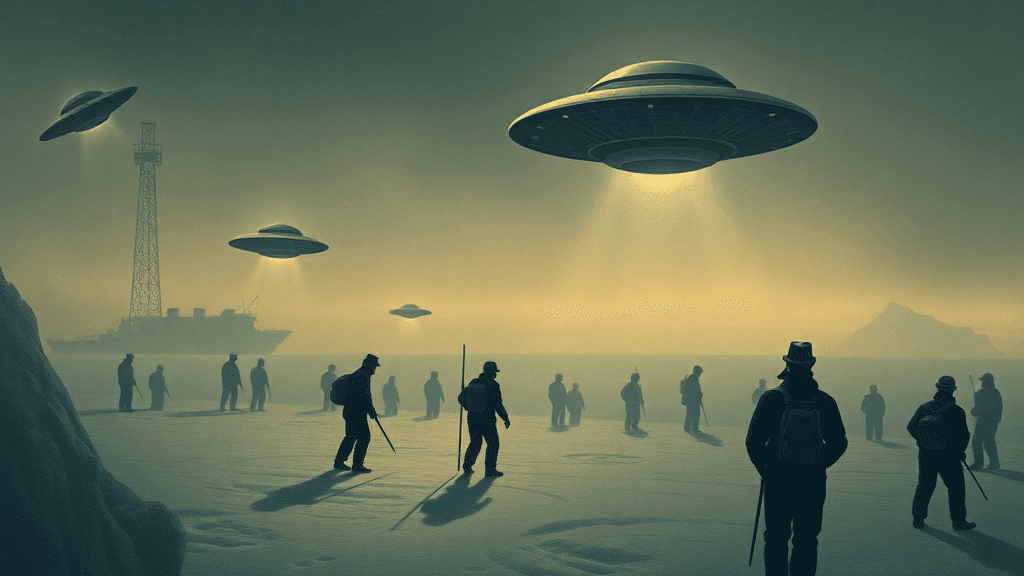
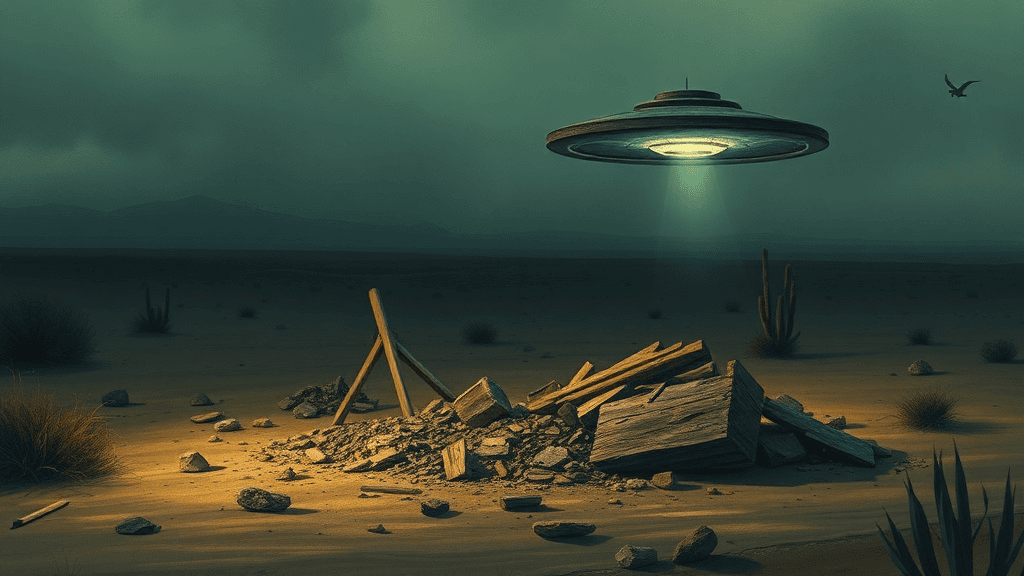
According to the account, which was published by Chile's official UFO-study body CEFAA in 2015, four men were dropped on the island for a month of measurement work: two scientists (identified only as Dr. Tagle and Professor Barros), an assistant, and a Navy nurse or paramedic. On the morning of January 8, Tagle woke Barros to look at the sky, and the two watched two metallic, cigar-shaped craft hover motionless and reflect sunlight. One object moved erratically in silence, the second moved briefly and rejoined the first. Barros estimated the altitude at about 8,000 m, the diameter at about 25 m and the speed of the moving object at roughly 4,000 km/h. A scintillation counter reportedly read about four times normal background radiation. The account says the party took colour and black-and-white photographs and that the objects vanished during a windstorm around 2 a.m.
The 1967 transcription in UFO Chile adds that Barros had earlier told a colleague not to wake him for ordinary lights in the sky, and that he compared the craft's apparent size to the Moon. The two versions differ on the sun's direction and on some other details, and the dates are given as January 8 in one source and January 8–10 in another.
Investigation and aftermath
The party's radio failed in early January, and a helicopter rescued the men on January 20, 1956. According to the CEFAA-derived account, they reported the sighting to a senior Chilean Navy officer, who was not surprised, and the US Air Technical Intelligence Center (ATIC) later sent a long questionnaire that Barros and Tagle completed. Neither claim has been confirmed from an archive. No ATIC file, Chilean Navy record, or expedition log has been located, and no account of the sighting appears in the Project Blue Book literature. A Reddit repost of the case claims the photographs and logbook were seized, but the source is secondhand and anonymous.
The account was not published in Chile in 1956. The earliest version found is the October 1967 UFO Chile bulletin, which was reissued decades later by a fan-run archive. The 2015 CEFAA page and its 2016 update are the most formal presentation, but they draw on the same material.
Assessment
The case is best regarded as contested. The narrative is detailed and internally consistent in its main outlines, and it reads as the report of a scientific party rather than a rumour. But almost everything rests on pseudonymous witnesses and on ufology publications. The names, the figures for altitude and speed, the radiation reading and the ATIC questionnaire all come from one retelling, and no primary document has surfaced. The location is also uncertain: the account's coordinates (65°S, 60°E) do not match Robert Island in the South Shetlands, and fit Robertson Island only roughly.
Whether the 1956 party in fact saw anything is unresolved. The most plausible explanations, such as atmospheric optics, a misidentified aircraft or a misremembered account decades later, cannot be tested with the material available. A Chilean Navy or IGY archive search, or the original CEFAA file, would be the first steps toward settling it.
Witnesses
Pseudonymous: 'Dr. Tagle' and 'Professor Barros' (two scientists), an unnamed assistant, and a Navy nurse or paramedic. The 1967 transcription also mentions a warrant officer and a Navy sergeant paramedic, so the roster differs between sources.
Evidence
Claimed: colour and black-and-white photographs, a scintillation-counter radiation reading (about four times normal), an expedition logbook, and an ATIC questionnaire completed by the witnesses. None of this has been seen outside the published accounts; no primary record has surfaced.
Filed under
Watch
Alien Base And Flying Saucer Found In Antarctica 2013 HD - UFO Evidence in Antarctica
UFOs in Antarctica: Twelve True Cases
Where this entry came from
ProvenanceAgent indexedUpdated 6d ago4 sources
Drafted by the archive's AI research agent from the sources below; corrections from readers are reviewed and folded in.
- First indexed
- 05 NOV 26 // 13:18Z
- Last updated
- 05 NOV 26 // 13:18Z
- Antarctic Robert Island Case, January 8, 1956, Jan Aldrich; CEFAA; updated by Jose Patricio Lay Lagos, Project 1947 (CEFAA account, published 2015, updated 2016)
- UFO Chile No. 2, page 1, Unknown, UFO Chile (Chilean ufology bulletin, Oct 1967), transcript archive
- Robertson Island, Wikipedia contributors, Wikipedia
- Robert Island, Wikipedia contributors, Wikipedia
Notes
- Antarctic Robert Island Case, January 8, 1956, Jan Aldrich; CEFAA; updated by Jose Patricio Lay Lagos, Project 1947 (CEFAA account, published 2015, updated 2016)
- UFO Chile No. 2, page 1, Unknown, UFO Chile (Chilean ufology bulletin, Oct 1967), transcript archive
- Robertson Island, Wikipedia contributors, Wikipedia
- Robert Island, Wikipedia contributors, Wikipedia