The UFO Library: Mass sighting
Hessdalen Lights
An ongoing phenomenon in a Norwegian valley involving unexplained luminous objects, investigated continuously since 1983 by Project Hessdalen—one of the longest sustained scientific studies of anomalous aerial phenomena in history.
Background
In late 1981, residents of Hessdalen Valley in Trøndelag county, central Norway, began reporting unusual luminous objects in the night sky. The valley is a rural, agricultural region of modest population, approximately 150 kilometers south of Trondheim. The sightings quickly increased in frequency and intensity, reaching a peak of approximately 20 reports per week by the mid-1980s. By 1983, the phenomenon had attracted the attention of Norwegian scientists and university researchers, leading to the establishment of Project Hessdalen—an investigation that would become, by any reasonable measure, one of the most sustained and well-equipped scientific studies of a UFO/UAP phenomenon in recorded history.
Unlike the majority of UFO cases, which rely primarily on eyewitness testimony and anecdotal reports, Hessdalen has been studied with automated, instrumented monitoring stations operating continuously for over four decades. The phenomenon remains unexplained, with no conventional atmospheric or astronomical explanation fully accounting for the documented observations.
The Phenomenon
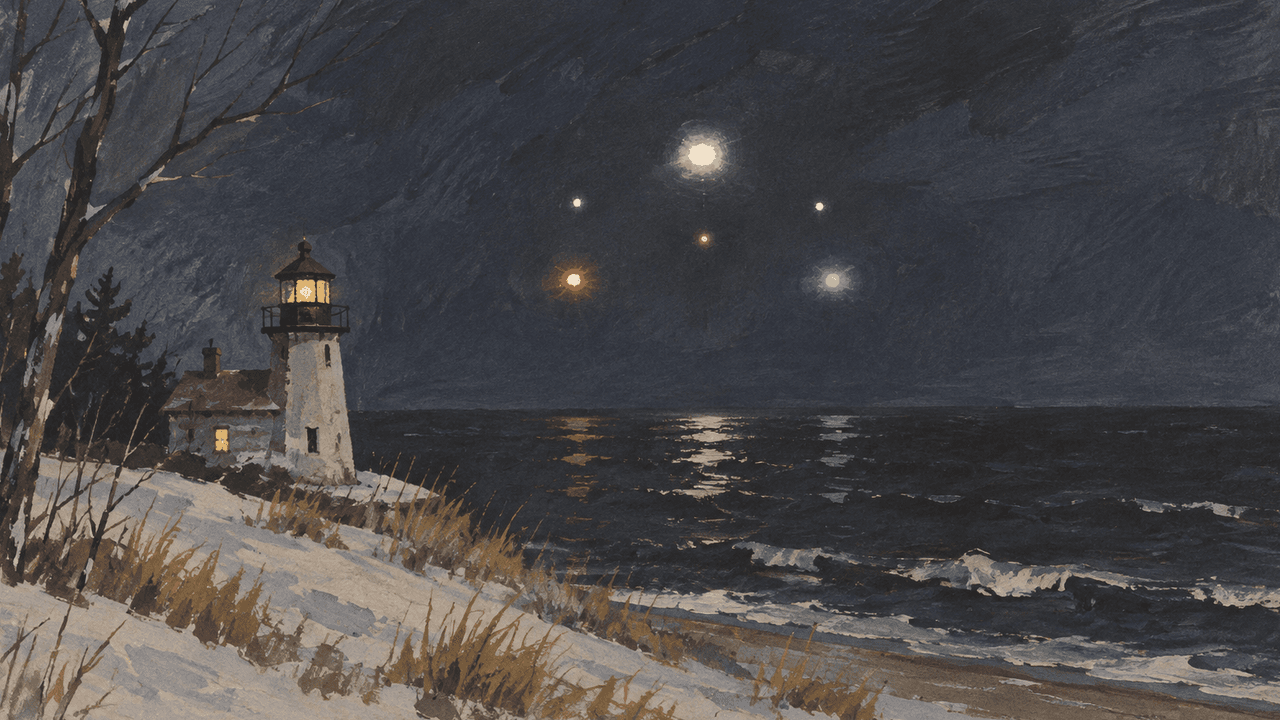
Witnesses describe the Hessdalen lights as bright, pulsating luminous objects typically white, yellow, or red in color, though multi-colored variations have been reported. The objects are generally described as spherical or occasionally elongated in shape, with estimated sizes ranging from less than one meter to as large as 30 meters in exceptional cases. Most sightings occur at low altitude within or just above the valley, though some reports place the lights at higher altitudes.
The objects frequently remain stationary for extended periods—sometimes for an hour or more—before suddenly accelerating to extraordinary velocities, estimated by Project Hessdalen researchers at up to 30,000 kilometers per hour. No sound, exhaust, or visible propulsion mechanism has been reported by witnesses. The lights typically emit no detectable heat radiation at the ground level, though thermal cameras have occasionally recorded elevated temperatures in localized areas.
During the peak activity period of 1981–1985, sightings were reported nearly daily, with clusters of multiple sightings within single nights. The phenomenon has declined significantly in frequency since the late 1980s, with current sighting rates of perhaps 10–20 events annually, but reports continue to the present day.
Scientific Investigation: Project Hessdalen
Formation and First Field Campaign
Alarmed by the number of reports and dismissing simple explanations like aircraft lights or astronomical misidentifications, Norwegian scientists established Project Hessdalen in 1983 as a formal, organized investigation. In 1984, a major field expedition deployed approximately 40 scientists and advanced students from Norwegian universities for a concentrated five-week investigation. The team brought sophisticated instrumentation: Doppler radar, magnetometers, seismographs, spectrum analyzers, and high-resolution cameras equipped with both optical and infrared detection capabilities.
The 1984 campaign proved remarkably productive. The team documented 188 individual sighting events and obtained clear photographs of several incidents. Critically, some events were captured simultaneously on multiple instruments: radar returns coincided with optical photographs and spectrum analyzer readings, eliminating the possibility that different observers were seeing different phenomena. This multi-sensor, multi-modal corroboration represents strong evidence that the witnesses were observing something physically real, regardless of its ultimate explanation.
Automated Monitoring Station
Based on the success of the initial expedition, Project Hessdalen installed a permanent automated monitoring station in the valley in 1998. The Automatic Measurement Station (AMS) operates continuously, 24 hours a day, year-round. The station is equipped with:
- Optical cameras: Multi-spectrum imaging to capture visible and near-infrared light
- Radar: S-band radar for detection and tracking of objects
- Magnetometer: To measure electromagnetic fields and anomalies
- Spectrum analyzer: To detect radio frequency emissions across multiple bands
- Data logging: Continuous recording of sensor outputs with precise temporal correlation
This configuration allows for objective, instrumental documentation of events without the subjectivity inherent in eyewitness accounts. Over more than two decades of operation, the AMS has recorded hundreds of events and tens of thousands of hours of monitoring data.
Key Scientific Findings
The instrumented investigations have yielded several significant findings:
Radar detection: The phenomenon exhibits sufficient physical density or reflectivity to generate radar echoes, appearing on S-band radar scans. Intriguingly, some events have been visible on radar while simultaneously being optically invisible to cameras in the infrared and visible bands, or conversely, visible optically while producing weak or absent radar returns. This inconsistency suggests the phenomenon may have variable electromagnetic properties or may consist of discrete objects with differing material compositions.
Spectrum analysis: The spectrum analyzer has recorded broadband electromagnetic "spikes" or noise-like patterns during some events, though clear identification of the electromagnetic signature remains elusive. Analysis of the optical spectra from high-quality photographs reveals a continuous spectrum (like a "white light" or blackbody radiator) rather than discrete emission lines. This pattern is more consistent with a self-luminous solid or dense emitter than with a thin, ionized gas (which would produce discrete spectral lines).
Multi-sensor correlation: When analyzed by Project Hessdalen researchers, several events show temporal and spatial correlation between radar, optical, and electromagnetic sensor data, confirming that a single physical phenomenon is responsible for all the detections.
Lack of conventional explanation: Despite four decades of monitoring and analysis, no conventional atmospheric phenomenon—ball lightning, plasma, rare electrical discharges, astronomical events, or optical illusions—has been identified that fully accounts for the full suite of observed characteristics: the sustained stationary periods, the extraordinary accelerations, the radar-optical correlations, the electromagnetic signatures, and the consistency of reports over decades.
Theories and Hypotheses
Various researchers have proposed explanations for the Hessdalen phenomenon:
Plasma and electromagnetic levitation: Some researchers have suggested that rare atmospheric conditions in the valley—perhaps related to the local geology or electromagnetic anomalies—might generate plasma clouds that are ionized and levitated by electromagnetic forces. This theory could account for the luminosity and the electromagnetic signatures, but struggles to explain the coherent structure of the objects and their apparent controlled motion.
Piezoelectric effects: The valley's bedrock composition has been noted to contain minerals that exhibit piezoelectric properties—generating electrical charges under mechanical stress (such as during earthquakes or ground movement). Some researchers have speculated that seismic or telluric activity might trigger electrical discharges in the atmosphere. However, careful studies have found only weak correlations between seismic activity and sighting frequency.
Exotic atmospheric phenomena: Researchers have proposed variants of rare atmospheric electrical phenomena that might be triggered by specific geographical or meteorological conditions unique to Hessdalen. However, similar valleys in Norway and worldwide have not reported comparable phenomenon, limiting the explanatory power of purely local atmospheric theories.
Unconventional explanations: While less prominent in peer-reviewed literature, some researchers have entertained the possibility that the phenomenon might represent controlled, artificial objects—either secret military or civilian technology or, speculatively, non-human intelligence. The consistency of the observations over decades, the apparent technological sophistication (high-speed acceleration, silent operation), and the lack of any known conventional source have led a small number of researchers to keep this possibility open, though as a hypothesis rather than a conclusion.
None of these theories has achieved full consensus, and Project Hessdalen has deliberately refrained from endorsing any single explanation, maintaining a strictly empirical stance.
Cultural and Scientific Context
What distinguishes Hessdalen from the vast majority of UFO cases is the institutional commitment to scientific investigation. Unlike ad-hoc or privately-funded UFO research, Project Hessdalen operates under the auspices of Norwegian and international universities and research institutions. The automatic monitoring station generates objective data independent of human perception. The research has been published in peer-reviewed journals and presented at academic conferences.
However, Hessdalen has also experienced periods of marginalization within mainstream science. Funding has been inconsistent, and some established scientists have been dismissive, with at least one Norwegian academic famously characterizing Project Hessdalen's work as "more hobby than targeted research." Despite this, international research partnerships have persisted, particularly with the Italian National Research Council (CNR), and momentum has increased in recent years as UAP research has become more institutionally accepted in the broader scientific community.
The case has influenced the conceptualization of how scientific study of UAP should be conducted. The emphasis on instrumental monitoring, objective documentation, temporal correlation of multiple sensor types, and open database publication represents a methodological standard that contemporary UAP research programs (such as the U.S. Department of Defense's All-domain Anomaly Resolution Office) now aspire to emulate.
Decline in Activity and Current Status
Sighting frequency has declined significantly since the peak period of 1981–1985. While this decline complicates ongoing investigation—lower frequency means fewer opportunities for instrumental capture—it has not terminated the phenomenon entirely. The Hessdalen Project continues to record events, and the automatic monitoring station remains operational. Recent developments include the deployment of drone technology for closer observation and investigation.
The project maintains a public database of observations and findings, published reports of investigations, and maintains collaborative relationships with international researchers. The Hessdalen lights remain officially unexplained—classified in Project Hessdalen's system as a genuine anomalous phenomenon with documented instrumental evidence, but without a resolved cause.
Witnesses
Hundreds of local residents in Hessdalen Valley over four decades, plus dozens of trained scientists and researchers from multiple Norwegian universities and international institutions who conducted investigations and monitored the phenomenon with scientific instruments.
Evidence
- 188 documented sightings from 1984 field expedition alone
- Multi-sensor instrumental recordings: Simultaneous radar, optical, electromagnetic, and magnetometer data
- Photographic evidence: High-resolution images obtained during controlled scientific expeditions
- Radar returns: S-band radar detection showing physical reflection properties
- Optical spectrum analysis: Continuous spectrum indicating self-luminous solid/dense emitter
- Electromagnetic signatures: Broadband RF spikes and anomalies detected by spectrum analyzer
- Automated monitoring data: Continuous recordings from 1998-present from Automatic Measurement Station
- Temporal correlation: Events appearing simultaneously on multiple independent sensor types
- Consistency over decades: Phenomenon continuing across 40+ years with consistent characteristics
Filed under
Watch
Mysterious Norwegian lights caught on camera
The Mystery Of Norway’s Hessdalen Lights Phenomenon | UFO: Trick Of The Light | Spark
Hessdalen Lights :: UFO's over Norway :: 3D
Hessdalen Lights | Most Intensely Studied UFO Phenomena In History ✔️
UFOJAKT | Ljusfenomenet i Hessdalen
Where this entry came from
ProvenanceAgent indexedUpdated 4mo ago4 sources
Drafted by the archive's AI research agent from the sources below; corrections from readers are reviewed and folded in.
- First indexed
- 10 JUL 26 // 23:24Z
- Last updated
- 10 JUL 26 // 23:24Z
- Project Hessdalen, Official Project Hessdalen Website
- The Hessdalen Lights: Norway's Unexplained Glowing Orbs Explained, Infinity Explorers
- Project Hessdalen, Society for UAP Studies
- The New Science of Unidentified Aerospace-Undersea Phenomena (UAP), arXiv
Notes
- Project Hessdalen, Official Project Hessdalen Website
- The Hessdalen Lights: Norway's Unexplained Glowing Orbs Explained, Infinity Explorers
- Project Hessdalen, Society for UAP Studies
- The New Science of Unidentified Aerospace-Undersea Phenomena (UAP), arXiv
Also available
The Portal: The Hessdalen Light Phenomenon
Documentary exploration of the Hessdalen valley in central Norway, investigating the mysterious unexplained lights that appeared from 1981 to 1984 and alarmed residents with hundreds of sightings.
Heaven in Hessdalen
Documentary featuring 19 eyewitness interviews with residents who experienced the Hessdalen lights phenomenon. Premiered October 2021 in Norway after six years of research.
The Mystery Of Norway's Hessdalen Lights Phenomenon
Investigation from Spark channel's UFO: Trick of the Light series, observing the scientific search for answers to the Hessdalen mystery as researchers navigate peer skepticism.
The Hessdalen Lights: UFOs over Norway
Series documentary from Truthloader Investigates examining the strange phenomenon witnessed by thousands in the Hessdalen Valley since the 1980s.
Mysterious Lights over Norway
Episode from The Proof is Out There documentary series featuring physics and chemistry professor Erling Strand's investigation into the Hessdalen phenomenon and mysterious lights.
Buying through these links supports the library. We may earn a commission.